

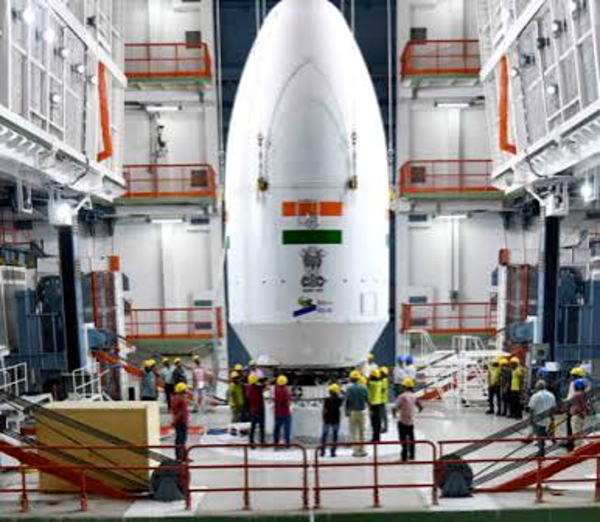
SRIHARIKOTA: The Indian Space Research Organisation has successfully launched EOS-05, a dedicated Earth-observation satellite designed to provide more continuous monitoring of large areas.
The satellite was launched aboard the GSLV-F17 rocket from the Satish Dhawan Space Centre in Sriharikota. Weighing about 2,367 kg, EOS-05 has been placed on a geosynchronous transfer path and is intended to operate from an orbit around 36,000 km above Earth.
Its position will allow the satellite to observe a broad region more continuously compared with conventional Earth-observation satellites operating in lower orbits.
EOS-05 is expected to support several applications, including weather monitoring, agriculture, water-resource assessment and disaster management. The satellite will also add to India’s ability to monitor changes on the ground and provide imagery for different operational requirements.
The mission is significant for ISRO because of the satellite’s size and the technical requirements involved in placing a large imaging payload into a geosynchronous orbit.
The launch was carried out using the GSLV-F17, which successfully placed the satellite into its intended transfer orbit after lift-off.
Earth-observation satellites play an important role in areas such as monitoring floods, assessing agricultural conditions and tracking changes in natural resources. Continuous or frequent observation can help authorities respond more quickly when conditions change.
EOS-05 therefore adds another capability to India’s growing Earth-observation programme. Its data is expected to be useful across civilian applications as well as areas requiring regular monitoring.
The mission also demonstrates the increasing role of satellite technology in providing information for planning, disaster response and management of natural resources.



Comment here