

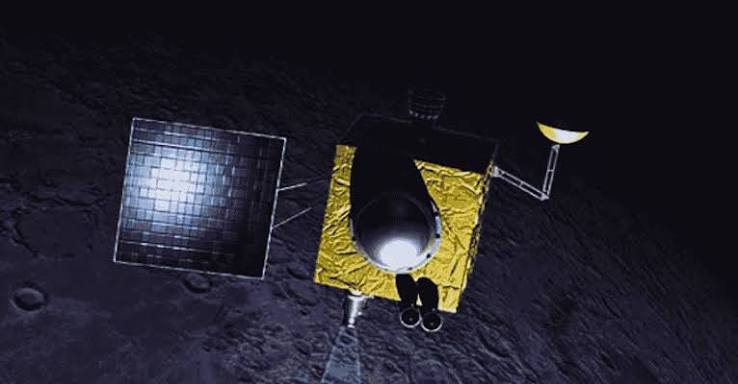
Data collected by India’s Chandrayaan-1 mission has helped researchers identify evidence of an ancient impact basin on the Moon that could be older than the previously recognised South Pole-Aitken Basin.
Researchers from the Physical Research Laboratory in Ahmedabad have identified the Australe Basin in the Moon’s southeastern hemisphere using mineralogical information obtained by Chandrayaan-1’s Moon Mineralogy Mapper.
The basin had remained difficult to identify because its original rim has been heavily eroded over billions of years. Instead of relying only on visible surface features, researchers studied the distribution of minerals associated with material excavated by the ancient impact.
A broad distribution of orthopyroxene around Mare Australe provided important evidence for the basin. The mineralogical pattern suggests that material from deep beneath the lunar surface was exposed during a massive impact.
The researchers also identified a ring-like arrangement of numerous small basalt ponds around the region. These geological features provide additional clues about the structure and history of the basin.
The discovery is significant because impact basins preserve information about the early geological history of planetary bodies. Understanding their formation can help scientists reconstruct the sequence of major events that shaped the Moon.
The Australe Basin may also provide researchers with an opportunity to study ancient lunar crustal material that has survived despite extensive geological changes.
The study demonstrates the continuing scientific value of data collected by Chandrayaan-1, even years after the spacecraft completed its mission.
India’s first lunar mission continues to contribute to planetary science through analysis of its extensive dataset. Researchers are using the information to study the Moon’s mineral composition, surface evolution and geological history.
The new findings could lead to further investigations of the region and help refine scientists’ understanding of the timing and scale of major impacts in the early history of the Moon.


Comment here