

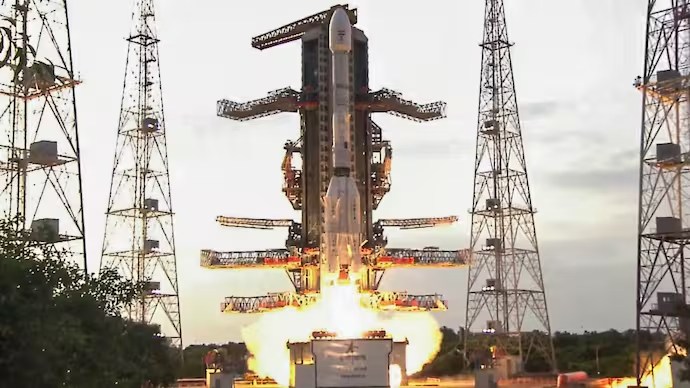
The Indian Space Research Organisation (ISRO) is preparing to launch its NVS-03 navigation satellite on October 30, in a mission expected to strengthen India’s regional satellite navigation system, NavIC.
The satellite is scheduled to be launched aboard a Geosynchronous Satellite Launch Vehicle (GSLV) from the Satish Dhawan Space Centre in Sriharikota, Andhra Pradesh.
NVS-03 is part of the second generation of satellites developed for Navigation with Indian Constellation, or NavIC. The system is designed to provide positioning, navigation and timing services for civilian and strategic applications.
The upcoming mission is important because the operational constellation currently has a limited number of satellites capable of providing independent positioning services. In a written reply to Parliament in July, the government said three satellites were providing NavIC positioning, navigation and timing services.
Satellite-based positioning generally requires signals from at least four satellites to calculate a receiver’s location and correct its internal clock. With only three operational satellites available for positioning, NavIC’s ability to independently determine locations has been affected, although timing services remain functional.
The shortfall does not mean that navigation on smartphones has stopped working. Many consumer devices use other satellite navigation systems, including the United States’ Global Positioning System (GPS).
Once launched, NVS-03 will need to reach its intended orbit and complete the necessary commissioning procedures before entering operational service. Its contribution to restoring independent positioning capability will depend on the satellite becoming fully functional.
NavIC supports applications such as transport, location-based services, timing and other systems that depend on reliable navigation signals. A stronger constellation could improve the availability of India’s own navigation infrastructure for civilian and strategic users.
ISRO is also working on additional satellites, including NVS-04 and NVS-05, to strengthen the network.
The October 30 mission is therefore an important step in the continuing effort to maintain and expand India’s indigenous satellite navigation capabilities.


Comment here