

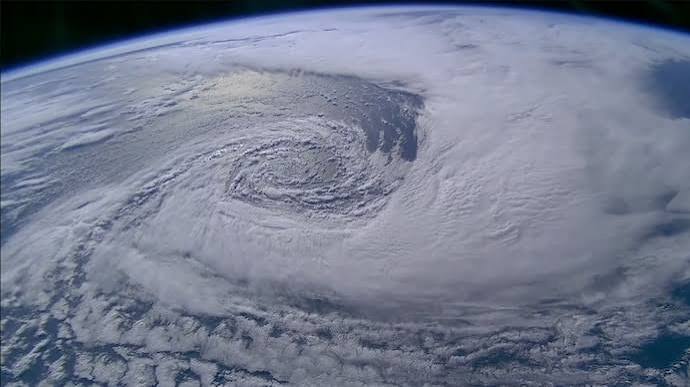
Satellite imagery has captured a large low-pressure weather system that travelled across India from the Bay of Bengal towards Gujarat, providing a view from space of the system responsible for heavy rainfall across several parts of the country.
The weather system developed over the Bay of Bengal before moving westwards across central India. Its movement carried large amounts of moisture and contributed to intense spells of rain in parts of western India.
An image of the system captured from orbit showed the extensive cloud formation associated with the low-pressure area. The satellite observation provides a broader picture of the scale and movement of weather systems that influence India’s monsoon.
The system has been associated with heavy rainfall in Gujarat and other parts of western India. Weather activity linked to the system has also affected central parts of the country as it moved westwards.
Satellite observations are an important tool for meteorologists because they provide information over large geographical areas, including regions where ground-based observations may be limited. Data from weather satellites can help track cloud formations, atmospheric systems and the movement of moisture.
The latest observation also comes as the Southwest Monsoon approaches its seasonal withdrawal phase. Weather systems can continue to produce significant rainfall even as the monsoon begins to retreat from parts of the country.
The satellite view offers scientists and weather agencies another way to monitor the development and movement of such systems in near real time.
Accurate monitoring is important for weather forecasting, particularly when low-pressure systems have the potential to produce heavy rainfall, flooding and disruptions to transport and daily life.
The latest satellite imagery therefore provides both a visual record of the monsoon system and useful information for understanding its movement across the Indian subcontinent.
Scientists and meteorological agencies will continue monitoring the system and associated rainfall as weather conditions evolve across different parts of the country. (indiatoday.in)


Comment here