

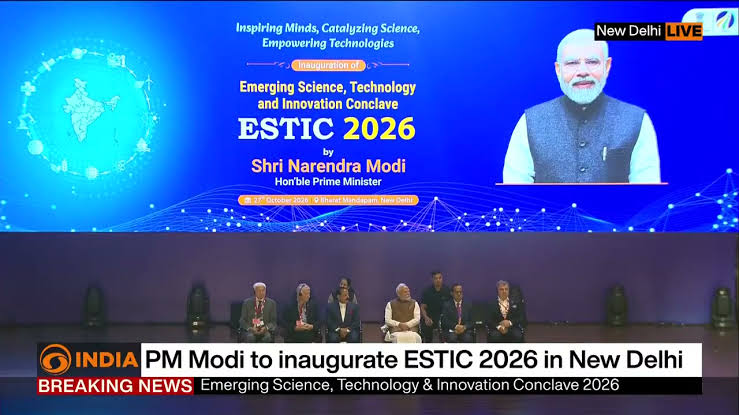
Prime Minister Narendra Modi inaugurated the Emerging Science, Technology and Innovation Conclave (ESTIC) 2026 at Bharat Mandapam in New Delhi on Tuesday, bringing together researchers, scientists, policymakers, industry representatives and technology startups to discuss India’s scientific priorities.
The three-day conclave, running from October 27 to 29, is intended to strengthen cooperation across the country’s science, technology and innovation ecosystem and support the national vision of Viksit Bharat 2047.
The programme covers 12 thematic areas, including artificial intelligence, biotechnology, advanced materials, manufacturing, healthcare, energy, climate science and ocean sciences. Discussions are expected to examine research priorities, emerging technologies and ways to translate scientific advances into practical applications.
The event also features an exhibition showcasing indigenous scientific developments and emerging technologies. Around 150 deep-tech startups are participating, providing an opportunity to present their work and connect with researchers, investors, industry representatives and potential collaborators.
A new Global Connect Networking Event is bringing together more than 300 invited participants from academic institutions, research organisations and industry in India and abroad. The initiative is intended to encourage international research partnerships and strengthen links between laboratories and commercial applications.
ESTIC 2026 is organised by the Council of Scientific and Industrial Research under the guidance of the Office of the Principal Scientific Adviser to the Government of India, with CSIR-NIIST serving as the organising partner.
The conclave aims to bring different parts of the innovation ecosystem onto a common platform. Researchers can exchange ideas with industry representatives, while startups can explore partnerships that may help them develop and scale their technologies.
The programme comes amid increasing attention to advanced manufacturing, artificial intelligence, clean energy and other technologies considered important for India’s future economic and scientific capabilities.
The discussions and networking sessions over the three days are expected to identify areas for collaboration and highlight technologies that could contribute to national development. The longer-term impact will depend on how the ideas and partnerships emerging from the event translate into research programmes, products and practical solutions.

Comment here