

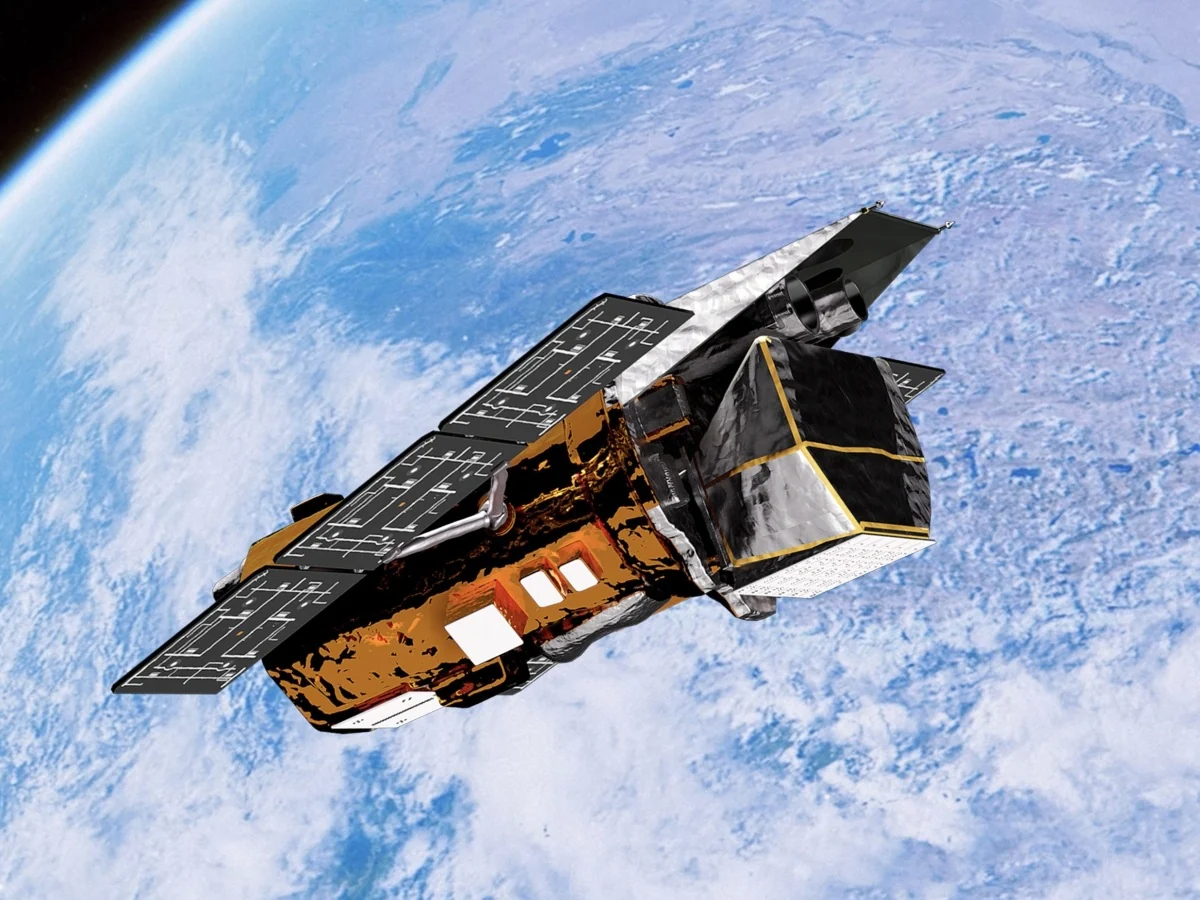
NASA’s Neil Gehrels Swift Observatory has re-entered Earth’s atmosphere, bringing an end to its 22-year mission studying some of the most powerful explosions in the universe.
The spacecraft re-entered the atmosphere on November 4 over Indonesia, according to NASA and the United States Space Force. The re-entry occurred at approximately 12:39 UTC, or 7:39 AM Eastern Standard Time.
The observatory was launched in November 2004 to study gamma-ray bursts, which are among the most energetic explosions known in the universe.
Swift was designed to detect gamma-ray bursts and rapidly direct its instruments towards their sources. It also carried out observations of supernovae, black holes, neutron stars and other cosmic objects.
During its operational lifetime, the mission provided astronomers with valuable information about the origins and evolution of high-energy astronomical phenomena.
The spacecraft’s final re-entry followed an unsuccessful effort to extend its operational life through a servicing mission. The rescue attempt, which concluded in August 2026, did not succeed in boosting Swift into a higher orbit.
NASA had previously reported that increased solar activity was raising atmospheric drag on the satellite, causing its orbit to gradually decline.
The observatory resumed scientific observations after the servicing effort was unsuccessful. However, its altitude continued to decrease, eventually making continued operations impractical.
The spacecraft entered Earth’s atmosphere at a high speed. NASA expected most of its structure to burn up during re-entry, although some fragments could potentially survive.
Authorities assessed the risk to people on the ground as very low. No injuries or damage were reported in connection with the re-entry.
Swift’s mission leaves behind a large collection of scientific observations that researchers can continue to analyse.
The observatory’s work has contributed to a better understanding of gamma-ray bursts and the extreme conditions associated with cosmic explosions.
Its legacy is expected to support future research into high-energy astrophysics.
Source: NASA and United States Space Force.

Comment here