

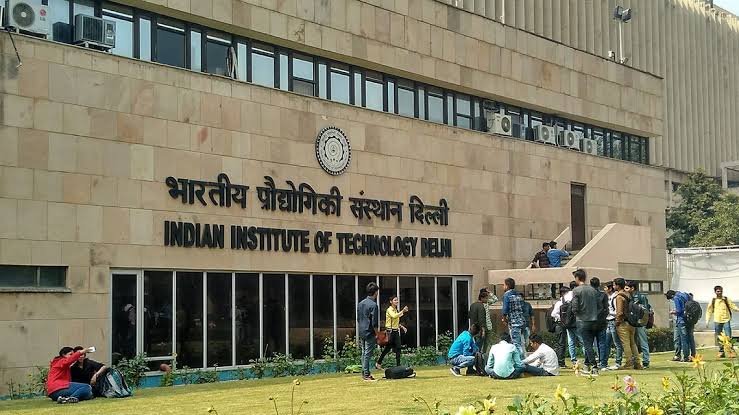
Researchers at the Indian Institute of Technology Delhi have demonstrated the transmission of quantum-entangled photons alongside conventional classical data over a 50-kilometre optical fibre link.
The demonstration addresses one of the key technical challenges in developing practical quantum communication networks: enabling fragile quantum signals to travel through the same fibre infrastructure that carries conventional telecommunications signals.
The research was led by Professor Bhaskar Kanseri of IIT Delhi’s Department of Physics, with PhD researchers Nishant Kumar Pathak and Abhay Singh Dulta also contributing to the work.
Quantum entanglement is an important phenomenon underlying several emerging quantum technologies. It is also relevant to quantum key distribution, a technology being explored for secure communication.
Conventional optical communication signals are significantly stronger than quantum signals. This difference can create noise that interferes with the delicate quantum states required for quantum communication.
The IIT Delhi team demonstrated that quantum and classical signals can coexist over the same optical-fibre infrastructure under controlled conditions.
The development could have implications for future quantum communication networks because it reduces the need to create entirely separate physical infrastructure for quantum and conventional communications.
Potential applications of mature quantum communication systems include secure communications for financial institutions, government agencies, healthcare organisations and critical infrastructure.
The researchers said the demonstration represents a step towards integrating quantum technologies with existing telecommunications networks. Such integration could help make future quantum networks more scalable and potentially more economical to deploy.
The research received support from IIT Delhi’s Institute of Eminence grant and India’s National Quantum Mission.
For India, the work adds to the country’s growing research capabilities in quantum technologies. It also supports the broader objective of developing indigenous expertise in secure communications and next-generation information technologies.
Further research will be required to extend the technology to longer distances and more complex network environments. The 50-kilometre demonstration nevertheless provides an important foundation for future quantum communication systems.


Comment here