

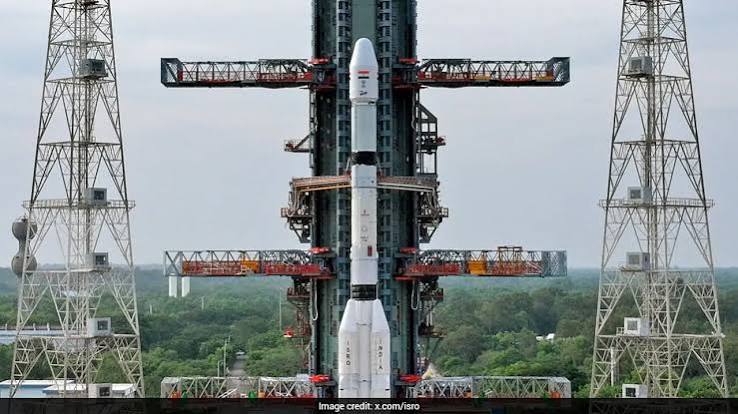
The Indian Space Research Organisation (ISRO) is scheduled to launch its next-generation navigation satellite, NVS-03, aboard the GSLV-F18 rocket from the Satish Dhawan Space Centre in Sriharikota on Friday night.
The launch is scheduled for 11:51 pm IST from the centre’s second launch pad. The mission will place the satellite into a Geosynchronous Transfer Orbit and is intended to strengthen India’s Navigation with Indian Constellation (NavIC) system.
Weighing approximately 2,250 kg, NVS-03 is the third satellite in the second generation of India’s navigation satellite series. It is designed to improve the continuity and reliability of positioning, navigation and timing services across the country and an area extending approximately 1,500 kilometres beyond India’s borders.
An important feature of the satellite is its indigenous atomic clock, which will operate alongside other atomic clocks onboard. Accurate timing is essential for satellite navigation because receivers use signals from multiple satellites to determine their position.
The mission will also support the expansion of NavIC’s signal capabilities, including the introduction of the L1 frequency alongside the existing navigation signals. This is expected to improve compatibility with a wider range of civilian navigation receivers.
The launch follows the difficulties encountered during the NVS-02 mission in January 2025. An analysis of that mission identified a problem in the signal delivery mechanism associated with the satellite’s orbit-raising operation. ISRO has said corrective measures were taken following the recommendations of an expert committee.
GSLV-F18 will mark the 20th flight of the Geosynchronous Satellite Launch Vehicle programme. The mission is part of India’s continuing effort to strengthen its independent space-based navigation infrastructure.
NavIC has applications in road, rail and maritime transport, disaster management, location-based services and strategic operations. A stronger satellite constellation is expected to support the reliability and wider use of these services.
The success of the mission will depend on the launch, accurate orbital insertion and subsequent commissioning of the satellite.


Comment here